Scopri i Post di Tendenza su Twitter/X
Lasciati ispirare dai contenuti di tendenza più recenti su Twitter/X.

Nov 18
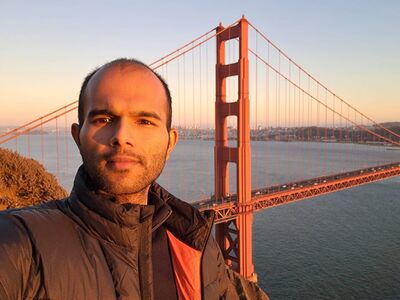
Most people start their careers with some privilege, and many start from zero. I started from minus ₹1 crore, and I did not even know it until my second year at IIT Delhi. Over the years, that debt took me from a failed placement day to Google, to a ₹2 crore side business, and finally to the startup I had always wanted to build. This is that story. My father ran a real estate business, and he had invested in under-construction flats from builders like Jaypee and Wave, paying most of the price up front through home loans. Years went by without the flats being delivered, but the banks still wanted their EMIs on time. So my parents borrowed from friends and relatives, and when that was not enough, from credit cards. My parents carried all of this debt quietly and tried to shield me from it. I knew we owed money, but never how much. Then in my second year, collection agents started coming to our house and sitting there, asking for payments we could not make. It stressed my mother a lot, and I could see it on her face every day. 𝗧𝗵𝗲 𝗹𝗶𝘀𝘁 One day, I sat my parents down and asked them a simple question: who exactly do we owe, and how much? Then I took a sheet of paper and started writing down how much we owed, to every bank, every friend, every relative and every credit card. The list kept getting longer, and by the time I finished, the principal alone was more than ₹1 crore. I still remember how heavy it felt while writing each line. That day, I knew I had to grow up quickly and get my parents out of this situation. I had joined IIT knowing exactly what I wanted to do after college, which was to build a startup. But that sheet of paper changed everything, and the dream would have to wait. The new plan was to get a high-paying job, pay off everything on that list within two years so that my parents could finally breathe again, and only then pursue my dream of starting up. 𝗠𝘂𝗿𝗽𝗵𝘆'𝘀 𝗹𝗮𝘄 From my third year, everything I did was aimed at that one goal: getting a job at an HFT, which paid ₹50 lakh+ a year. I was ranked 2nd in my department and had a CGPA of 9.7/10, so I genuinely believed I could get in. Then day one of campus placements came. I prioritized Tower Research over the other companies, cleared three rounds, and was rejected in the final one. I was so crushed that I could not perform at the others that had shortlisted me, and by evening, they were all gone. That evening was really hard. Every rupee I was not going to earn meant my parents would have to carry that weight for longer. On day two, I took an offer from Cohesity at ₹18 lakh a year. It was a good job, but nowhere near the number we needed. In July 2019, I moved to Bangalore, stayed in a PG, kept my monthly expenses to under ₹20,000, ate meals at the office, and rarely went out with friends. Everything else, I sent back home. My friends would talk about investing and going on trips, but I did none of that. I soon realized that this salary would never be enough. So I set a new target: Google US. Whatever time I could find outside work went into competitive programming, and I soon became a Master on Codeforces. In January 2020, I started applying to Google and other companies in the US and UK. A few weeks later, COVID hit, and overnight, companies stopped hiring overseas candidates. The way out I had been working towards for months disappeared. 𝗪𝗵𝗲𝗿𝗲 𝗱𝗶𝗱 𝗮𝗹𝗹 𝘁𝗵𝗲 𝗺𝗼𝗻𝗲𝘆 𝗴𝗼? Around the same time, I got an offer and joined Spotnana as a founding engineer. I really liked their vision, and I believed that growing with a young startup and holding equity in it could be the big break I needed. About a year after I had started sending money home, I sat down to see where it had gone. Almost my entire salary had been spent on interest for our credit card loans. We had not reduced the principal and had not saved anything either. After a full year of hard work and sacrifice, the list was exactly as long as the day I had written it. That was one of the lowest points of my life. It felt like I was running as hard as I could, just to stay in the exact same place. Meanwhile, I was giving Spotnana everything, working on weekdays and weekends, and was one of the top performers there. But when appraisal season came, the raise was still not as high as I was hoping for. I was really disappointed. My equity, though promising, could not help us pay off the debt anytime soon. I told my manager I would need something on the side to make up the difference. I created a programming YouTube channel and later learned Android development, but neither brought in any money. 𝗜 𝗰𝗼𝘂𝗹𝗱𝗻'𝘁 𝘀𝗹𝗲𝗲𝗽 𝘁𝗵𝗮𝘁 𝗻𝗶𝗴𝗵𝘁 During that time, I was talking to one of my college seniors who had joined Google. I told him everything, about the list, my plan and my belief that I could clear it all in two years. He listened patiently and then told me the truth. If I stayed at Spotnana, it would not take two years, it would take more than four. He said that instead of being emotional about the company, I needed to be tactical if I really wanted to solve my family's problem. He then referred me to Google. The next four months were the most focused of my life, and every spare hour went into preparing for Google. When I got rejected from Uber and Coinbase, I was terrified about what would happen next. But then, Google said yes. The day the recruiter told me I had been selected for the Google Search team is still one of the best days of my life. That night, I couldn't sleep at all. I lay awake, too happy to close my eyes, thinking about how this would finally change things for my family. For the first time since I wrote that list, I could actually see a way to clear it. 𝗧𝗵𝗲 ₹𝟮.𝟭 𝗹𝗮𝗸𝗵 𝗯𝗲𝘁 When I joined Google, the list still had ₹80 lakh left on it, and salary alone would take years to clear it. But Google also gave me something I had not had before: time. So with Google's permission, I started a mobile apps business with my father, working nights and weekends. In the first three months, we built a bunch of Android apps and games, but could not make any revenue. Then I analyzed iOS versus Android and decided we should build for iOS instead. So we took the bet. I bought a MacBook Pro for a hefty ₹2.1 lakh, picked our most downloaded game on Android, built its Swift version in six days, and launched it on iOS. Installs were high from day one, and within a couple of days we turned on monetization. I kept refreshing the dashboard as paying users came in, and within just a few days the game had paid back the cost of the laptop. And that was just the beginning. Our revenue grew from ₹6 lakh in the first month to ₹24 lakh in the fourth, as we added more games. I was working close to 100 hours a week between Google and our apps. Over a year and a half, our games crossed 200K downloads, with players mostly from the US, and brought in more than ₹2 crore in revenue. 𝗖𝗿𝗼𝘀𝘀𝗶𝗻𝗴 𝗼𝗳𝗳 𝘁𝗵𝗲 𝗹𝗶𝘀𝘁 With that revenue and my Google salary, we finally started crossing lines off the list. This time we were not just paying interest, we were paying back the principal, one line after another. With every line we crossed off, the stress at home got a little lighter. In June 2023, we paid off the last one. The list I had written in my second year of college was finally empty. My parents were free, and after years of waiting, so was I. As soon as the last loan was cleared, I put in my papers at Google. The apps had left me with enough savings to finally start my own company. My last day at Google was the day before my 25th birthday, and on 21 July 2023, I woke up with no debt, no job, and for the first time in years, nothing standing between me and the thing I had always wanted to do. 𝗦𝗵𝗼𝘂𝗹𝗱 𝗜 𝗴𝗼 𝗯𝗮𝗰𝗸 𝘁𝗼 𝗮 𝗷𝗼𝗯? Over the next four months, I built 12 new games, but month after month, none of them worked. And it was not just me. Apple's iOS privacy changes had broken the economics of hyper-casual games. That November, I remember walking on my terrace, thinking about whether leaving my job had even been the right choice. My parents had started telling me to get a job again. But I had waited far too long for this chance to give it up. I decided to shut the games business down and hard pivot into SaaS. I started with Shopify apps, only to realize a month later that I had no unique idea and the competition was intense. I then analyzed around 70 B2B SaaS marketplaces to find the next Shopify app store, found monday, the project management platform, and started Super Workday, building apps for teams using it. My first app there failed too, because it was too niche. For the next one, I went through the platform's feature requests and picked the biggest unsolved problem. That one worked. In April 2024, after eight months without any revenue since leaving Google, I got my first paying customer. I was so happy that day that I emailed him just to tell him he was my first customer. I still remember his name. After that, I kept launching one new app every month, and the revenue grew sharply. Today, the business runs on autopilot, has 300+ paying customers, mostly in the US, and is close to $100K in ARR. It also paid for my sister's wedding, and being able to do that for my family made me very happy and proud. 𝗧𝗵𝗲 𝘀𝘁𝗮𝗿𝘁𝘂𝗽 With that income stable, I finally felt ready to go after a venture-scale idea and started building an AI executive assistant. In January 2025, South Park Commons, a Silicon Valley VC, invested $400K at a $5.7M valuation. I cannot explain what I felt the day their offer came. All those years of waiting finally made sense. My startup journey is still early. Since then, there have been many more ups and downs, and there are still many things to figure out. But for the first time, I am building the startup I always wanted to build, and I am ready for whatever comes next.
817K
10K
1K
2K

26K
319
19
30

16K
263
24
9


Nov 18
Your BLAST Rivals Hong Kong 2026 Tournament MVP, @kscerato 🏅🇭🇰 The @FURIA star dominated from start to finish, posting an incredible 1.55 rating to claim the MVP award 🏆 A third career MVP medal for the Brazilian star! 🇧🇷👀 #BLASTPremier https://t.co/OndzNBy0mv
12K
515
1
17

Nov 16
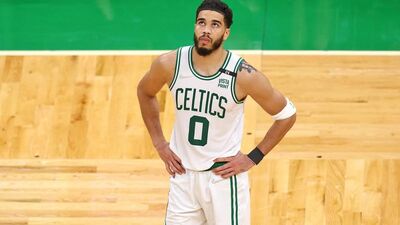
🤯 FOUR teams play on a back-to-back today! 📊 So I gathered data about who plays better on back-to-backs. See the 4 guys that you should target in those games.👇 🍀 Jayson Tatum - 40+ PRAs vs ORL Tatum has played three B2B games this season, going 2/3. He’s up against the Magic and their 26th ranked defense against Forwards. He’s coming off a big 32 PTS, 6 REB and 6 AST vs the Mavs, and P. George will probably not play today! — 🧙♂️ Alexandre Sarr - 20+ PRs vs MEM Sarr loves a B2B game. Coming off 39 PRs against Detroit and 29 PRs against OKC in his last two B2B games, he’s a favourite to see a lot of the ball against Memphis who are missing most of their big guys. — 🚀 Reed Sheppard - 10+ Points @ MIA Sheppard is 12/14 on this line on B2Bs vs a Heat team that rank #30 against his position. He had 19 Pts in his previous B2B game vs ATL. The Heat allow the most ATB threes in the league, where Reed is lethal. — ☀️ Collin Gillespie - 10+ Points @ DEN Gillespie’s hot zone is ATB threes and C&S, he should be effective against the bad Nuggets perimeter defense. (Who didn’t re-sign him 14 months ago). He was great yesterday and Phoenix will look to him on a B2B, as he’s cashed this in 14/17 B2B games going back to last season (82% hit rate). 💾 Save this data and thank me later!
16K
51
3
3


Nov 15
𝐓𝐡𝐞 𝐏𝟐𝐏 𝐁𝐨𝐨𝐭𝐬𝐭𝐫𝐚𝐩: 𝐇𝐨𝐰 𝟕 𝐍𝐨𝐝𝐞𝐬 𝐅𝐢𝐧𝐝 𝐄𝐚𝐜𝐡 𝐎𝐭𝐡𝐞𝐫 🌐 A new WINkLink node doesn't discover its peers through a directory service. It doesn't query a DNS. It doesn't hit an API. It dials a multiaddress. The format: /ip4/127.0.0.1/tcp/6788/p2p/12D3KooWMrKGdnH6nBrf7hDz25NXFSFNk7vgsTxj9bHskWEct4xh Three layers, one string: → /ip4/127.0.0.1 — the IP address → /tcp/6788 — the port (always 6788 for WINkLink) → /p2p/12D3KooW... — the peer ID (derived from the node's cryptographic key) The peer ID is not an alias. It's a hash of the node's public key. It's unique. It's permanent. It's the node's identity on the P2P mesh. 𝐓𝐡𝐞 𝐁𝐨𝐨𝐭𝐬𝐭𝐫𝐚𝐩 𝐅𝐥𝐚𝐠 ⚙️ Every node config has a boolean: isBootstrapPeer. → isBootstrapPeer = true → the node is a bootstrap node. It listens for incoming connections. It's the entry point. Other nodes dial it first. → isBootstrapPeer = false → the node is a price feed node. It dials the bootstrap node, then discovers the remaining peers through the mesh. The bootstrap node config is minimal: → p2pBootstrapPeers = [own address] → forwardingAllowed = false → maxTaskDuration = "0s" → No observationTimeout → No blockchainTimeout → No transmitterAddress It doesn't produce observations. It doesn't submit to the chain. It exists to be dialed. The price feed node config is full: → p2pBootstrapPeers = [bootstrap node's multiaddress] → isBootstrapPeer = false → transmitterAddress = the node's TRON wallet address → observationTimeout = "10s" → blockchainTimeout = "20s" → contractConfigConfirmations = 3 The bootstrap node is the door. The price feed node is the worker. The door doesn't work. The worker doesn't open the door. 𝐓𝐡𝐞 𝐃𝐢𝐬𝐜𝐨𝐯𝐞𝐫𝐲 𝐅𝐥𝐨𝐰 🔄 1. The new node reads its p2pBootstrapPeers array from the TOML config. 2. It dials the bootstrap node's multiaddress over TCP port 6788. 3. The libp2p handshake fires. The bootstrap node verifies the new node's peer ID (its public key hash). 4. The bootstrap node sends the new node the multiaddresses of the other 5 price feed nodes. 5. The new node dials each of the 5. 6. The mesh is complete: 7 nodes, 21 pairwise connections, full mesh. No directory. No DNS. No API call. One multiaddress in a TOML file. The rest is the mesh finding itself. 𝐖𝐡𝐲 𝐥𝐢𝐛𝐩𝟐𝐩 🛡️ The transport is libp2p over TCP. Not a bare WebSocket. Not a raw socket. libp2p adds: → Identity verification (peer ID = public key hash) → End-to-end encryption (Noise protocol) → Stream multiplexing (multiple concurrent streams over one TCP connection) → NAT traversal (nodes behind firewalls can still connect) The 7 nodes don't need to be on the same network. They don't need port forwarding. They don't need a VPN. libp2p handles the transport. The TOML file handles the identity. The mesh handles the rest. 𝐓𝐡𝐞 𝐒𝐭𝐫𝐮𝐜𝐭𝐮𝐫𝐚𝐥 𝐏𝐨𝐢𝐧𝐭 🏗️ A 7-node oracle doesn't need a discovery protocol. It needs one address in a config file. The bootstrap node is that address. The peer ID is the identity. The multiaddress is the path. The mesh is the result. Four components. One TCP port. Seven nodes. Twenty-one connections. No central directory. No single point of failure for discovery. If the bootstrap node goes down, the other 6 are already connected to each other. The mesh persists. The bootstrap node is only needed for the next node to join. #TRONEcoStar @justinsuntron @WinkLink_Oracle
107K
1
0
0

14K
251
13
21

Nov 16
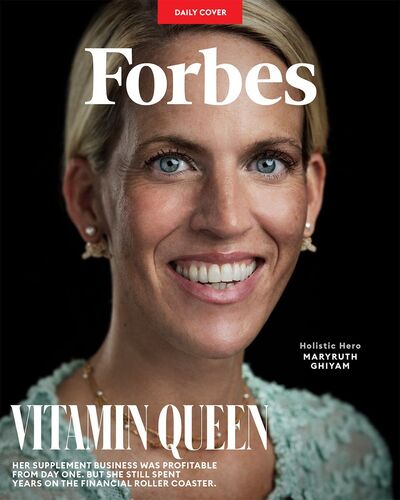
“If you have profit,” says MaryRuth's founder MaryRuth Ghiyam, “you have free will.” It hasn’t always been easy financially for Ghiyam. When she started MaryRuth’s, she was on the hook for $700,000 of her mother’s personal debt. She didn’t pay herself a salary for nine years. “It’s not easy,” she adds. “It’s been a long journey.” Get the inside story of the crazy, creative financing behind one of America’s best-selling wellness brands: https://t.co/HI6jzcfxY0 📸: Ethan Pines for Forbes
28K
50
10
10
Post di tendenza illimitati con Publer
Ottieni pieno accesso agli ultimi post di tendenza e gestisci tutti i tuoi social media con Publer, a partire da soli $4/mese.
Scopri i pianiEsplora Strumenti Gratuiti Consigliati
Massimizza la tua produttività e gestisci i tuoi contenuti senza alcuno sforzo con gli strumenti gratuiti di Publer.
Create impactful social media content inspired by trending posts
Trasforma gli ultimi post di tendenza in contenuti coinvolgenti per il tuo pubblico con Publer.
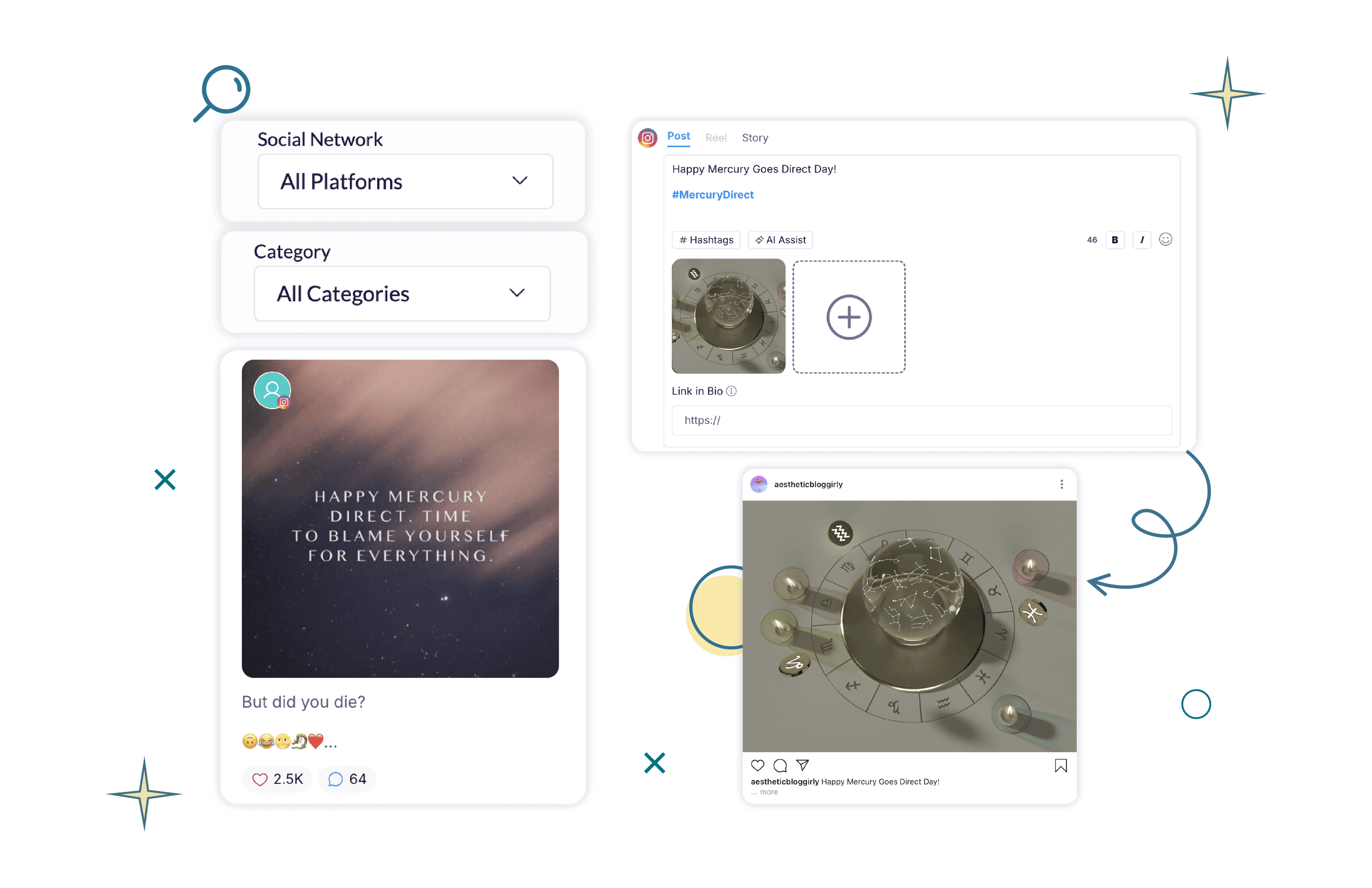
Programma i tuoi post sui social media
Con una suite di strumenti avanzati e un'interfaccia estremamente intuitiva, sarai in grado di creare, visualizzare, programmare e analizzare i tuoi contenuti social media con facilità.
Inizia gratuitamente