Eksploro postimet trending në rrjetet sociale
Gjej frymëzim nga përmbajtja më e fundit trending në rrjetet sociale.
Aug 4
Kevin Durants says the '26-27 Sixers are better than the '16-17 Warriors 👀 “Ain’t close. Joel, MVP recently. Jaylen Brown, recent Finals MVP. Tyrese Maxey, All Star the last 3 years. We all know what Bron does.” “Klay Thompson, never an MVP candidate or anything. Draymond, 14 PPG, 7 rebounds, 6 assists. Steph, an MVP just like Joel was. I don’t get how the Warriors team is better on paper.”
15K
81
42
29
STATEHOUSE PRESS STATEMENT FACTS, NOT FEAR: A POINT-BY-POINT RESPONSE TO ATIKU ABUBAKAR ON NIGERIA'S REFORM JOURNEY Politics thrives on disagreement. Democracy demands it. But disagreements must be rooted in facts, not frozen snapshots of history. When yesterday's data are presented as today's reality, the public deserves context. Former Vice President Atiku Abubakar, in his typical pastime, has accused the administration of President Bola Ahmed Tinubu of fiscal recklessness, citing excess borrowing in the 2024 budget, questioning the removal of fuel subsidy, criticising tax reforms, concocting an oil windfall of N7.98 trillion, and suggesting that Nigeria is drifting economically. His concerns, though misplaced, deserve a response—not because criticisms should be silenced - but because Nigerians should have a fuller picture of where the country is today. Here are the real issues Atiku and his courtiers should apprise themselves of: A Debate Anchored in 2024 Cannot Explain Nigeria in 2026 Perhaps the first observation is chronological. It is curious that in the middle of 2026, the opposition's principal economic argument remains anchored to developments in the 2024 fiscal year. Economies are dynamic. Reforms are processes, not events. Judging a reform programme solely by its earliest and most painful phase is like judging chemotherapy by the nausea it induces while ignoring the remission it seeks to achieve. The Nigerian economy that underwent painful adjustment in 2024 has evolved considerably. Following the exchange-rate reset, Nigeria's dollar-denominated GDP fell to about $253 billion, reflecting the immediate effect of currency realignment. Since then, figures from statistics bodies and multilateral agencies like the IMF indicate that it has recovered significantly to approximately $377 billion, representing an increase of roughly 49 per cent from that post-adjustment trough. Likewise, Naira GDP has expanded from about ₦314 trillion in 2024 to around ₦530 trillion, a 69% increase reflecting both higher economic activity and price changes. These figures should continue to be assessed alongside real GDP growth, inflation, and household welfare. They do illustrate that the economy did not remain frozen at its most difficult moment. The reforms were never advertised as painless. They were presented as necessary structural adjustments intended to correct long-standing distortions, including distortions created in the Obasanjo-Atiku years, 1999-2007. Borrowing Must Be Judged Alongside Economic Capacity On the matter of Nigeria’s debts, it is important to ask a broader question: What is Nigeria’s capacity to sustain her debt? For debt, in itself, is not the defining measure of fiscal health. What matters are the size of the economy; our revenue-generating capacity; debt servicing costs; the purposes for which funds are borrowed; and whether borrowed resources finance productive investments or recurrent consumption. Nigeria’s debts have been acquired for productive, long-term infrastructural and investment purposes – according to the law. Nigeria's debt-to-GDP ratio remains relatively modest (at barely 40%) compared with many peer economies and advanced countries (South Africa (85%), Egypt (80%), Ghana (60%), Kenya (75%), USA (130%), UK (110%), China (300% - unofficially), even though debt-service pressures have historically been significant. Still, the Tinubu Administration has seen a reduction in the debt service-to-revenue ratio, from a high of nearly 100% in December 2022 to less than 60% today. This is a remarkable achievement that shows that Nigeria’s revenue efficiency has improved, while debt management remains conservative and astute. All the same, the more meaningful question is whether borrowing finances investments that expand productive capacity and future revenues, rather than merely postponing difficult choices. Where Did the Subsidy Savings Go? For decades, economists across ideological divides criticised Nigeria's fuel subsidy as fiscally costly and poorly targeted. Even before the current administration, several international institutions had argued that the subsidy consumed resources that could otherwise support development. Nigerians suffered over the years as a vast proportion of our resources were deployed to pay fuel-subsidy merchants. An idea that was mooted in the early 1970s, when Nigeria saw her first oil boom in the aftermath of the Yom Kippur War, had become toxic and a drainpipe on the economy. It must be said that the government in which Alhaji Atiku was Vice President waded through that toxic phenomenon, and never did the needful. The current administration deserves commendation for being able to get rid of something that has become a lodestone around the neck of our collective patrimony. The visible consequence of subsidy removal has been the sharp improvement in revenues accruing to states and local governments through the Federation Account. Higher statutory allocations have expanded fiscal space at the subnational level, enabling many states to increase spending on roads, schools, hospitals, salaries, pensions, and social programmes. Independent assessments, including those from the World Bank, have noted improvements in public revenues and subnational capital spending, which is another word for infrastructural development, following major fiscal reforms. This means that President Tinubu has tactically placed more responsibility for socioeconomic development on states and local governments, while providing requisite funding. This is true federalism and a bold statement on the much-vaunted subject of economic restructuring – another important issue gallantly avoided by the government in which Alhaji Atiku served and wielded great influence. The Tax Reforms: Progressive, Not Punitive Another of Atiku’s uninformed criticisms suggests that the Tinubu administration chose to tax Nigerians more. This is blatantly false, and the statement is an attempt to deceive and dissemble. The objective of the tax reforms is not merely to increase collections but to create a broader, more equitable tax system. The reforms are intended to reduce the burden on many low-income earners (people earning N1 million per annum and below) and small businesses (with turnover of N100 million and below) while strengthening compliance among higher-income individuals and profitable enterprises – many of whom had avoided or evaded taxes under the cover of informality for decades. The underlying principle is that those with greater capacity should bear a larger share of the tax burden, while micro-enterprises and vulnerable households receive greater protection. Nigerians understand that to have a fine, working nation, we all must contribute to her prosperity. And we are on course. Health: From Infrastructure to Access Over the past three years, the Federal Government, working with states, has expanded efforts to rehabilitate and upgrade primary healthcare facilities, strengthen tertiary hospitals, improve access to essential medicines, and broaden maternal and child health interventions. The administration has also publicised initiatives aimed at reducing the financial barriers to maternal care, including programmes that support access to caesarean sections for eligible indigent mothers through public facilities. Over 100 facilities across Nigeria provide free caesarean operations for indigent mothers. Thousands of women across the country, from Sokoto to Port Harcourt, have benefited. Three world-class cancer centres are operational in Kubwa, Enugu and Katsina, while cancer centres in 13 states have been expanded. As at April 2026, over 3,000 Primary Healthcare Centres have been revitalised, upgraded, and refurbished, while over 78,000 frontline workers have been retrained in 3 years. This is verifiable information, and no mean feat. Education: Investing in Human Capital Federal and state governments have undertaken school rehabilitation, investments in technical and vocational education, digital learning initiatives, and expanded access to tertiary education finance in the last 3 years. Specifically, over 11,000 projects have been embarked upon by the Universal Basic Education Commission, with collaboration from the federal and state governments. This can be regarded as one of the boldest moves in the history of Nigeria to reposition education at primary and secondary levels. Among the flagship initiatives is the Nigerian Education Loan Fund (NELFUND), which has enabled hundreds of thousands of students to access loans for tuition and upkeep, reducing financial barriers to higher education. Over 1.64 million students have benefited across the country, with NELFUND disbursing over N303 billion through 300 higher institutions. Again, another unprecedented initiative touching lives positively. All over social media, Nigerians can see how relieved and jubilant Nigerian students have become. Add to this the fact that President Tinubu has seen to an end to strikes by university lecturers, such that a four-year programme does not go beyond four years, a great relief to students and parents. Infrastructure: Building for Tomorrow Nigeria's infrastructure agenda continues across transport, energy, and public works, with ongoing projects in federal highways and bridges, rail modernisation, inland dry ports and logistics, power transmission and distribution, airport redevelopment, gas infrastructure, housing, and digital connectivity. Many state governments have simultaneously accelerated road construction, urban renewal, healthcare, and education projects, aided by stronger fiscal inflows. The cumulative effect is an increase in public investment aimed at reducing logistics costs and supporting private-sector growth, the triggers for the 49% leap in GDP since 2024 (in Dollar terms), and a 69% leap in Naira terms. There is a lot more to come. Nigeria is certainly not over-borrowed The unvarnished truth is that Nigeria's revenue-to-GDP ratio is still ranked among the lowest globally, limiting the government's ability to fund public services without borrowing. Recent reforms have started to improve revenue mobilisation, broaden the tax base, reduce leakages, and strengthen public financial management. Certainly, improvements in revenue collection are helping reduce fiscal vulnerabilities. But this is a process that has commenced. Viewed from this angle, it is evident that President Tinubu has taken the Nigerian economy down a path of unprecedented reinvention and rejuvenation. The debt debate should, therefore, examine not only how much Nigeria borrows but also whether the country's capacity to generate and manage revenue continues to improve. At a mere 40% debt-to-GDP ratio and less than 60% debt service-to-revenue ratio (improving), the argument of overborrowing is alarmist and does not stick. Oil Windfall? Atiku and his handlers reveal analytical deficiency There is no such windfall of N7.98 trillion. Any incremental revenue from higher oil prices is reflected in the monthly FAAC figures. While the average price for the half-year 2026 for Brent is around $90 compared to the $64.85 benchmark, the average daily production fell short at about 1.6m bpd compared to the forecast of 1.84m bpd. The production shortfall partly offset the price premium. In addition, some crude volume had been pledged for loans used to pay for the wasteful subsidy in the past, which the President was bold enough to remove, stopping the bleeding but not immediately translating into available revenue. The convenient mistake many analysts make is to multiply the oil price by the daily crude production volume to determine revenue to the government. Such analyses ignore the cost of production, the share of crude belonging to the oil-producing companies and the impact of crude sale contracts such as forward contracts designed to hedge against price volatility. Atiku will do well to show the workings for his N7.98 trillion oil windfall. Conclusion: For Nigeria, Forward Ever! History rarely remembers governments for the popularity of their decisions in the moment. It remembers whether those decisions ultimately strengthened or weakened the nation. President Tinubu's administration has chosen to dismantle several long-standing policy distortions that previous governments acknowledged but often deferred. The reforms have carried undeniable costs, and legitimate questions remain about implementation, inflation, and social protection. Yet describing the entire programme as "financial recklessness" overlooks the broader context of structural change, fiscal rebalancing, and efforts to improve macroeconomic stability. A mature national conversation should move beyond slogans. It should assess reforms against measurable outcomes rather than isolated episodes. We welcome elevated discourses that examine the philosophical underpinnings of President Tinubu’s approach to the economy, not pedestrianism. Nigerians need elevated standards of living, which requires immediate sacrifices. But indeed, the worst is over, as the effects of the necessary economic chemotherapy were more severe in 2023 and 2024. All economic watchers are aware that in November 2025, inflation rates in Nigeria fell to 14.4%. Because of the disruption caused by the Middle East War, the rate shot up to 15.91%. But it has begun another descent as economic analysts project that inflation will trend towards 12% by the end of the year. As part of measures to bring relief to Nigerians severely impacted by the economic reforms, the Federal Government recently launched the ward-centric NG-CARES, HOPE and SOLID programmes worth more than $3 billion to strengthen primary healthcare, basic education, and support for vulnerable communities. This is in addition to the Humanitarian Ministry’s cash transfers to 15 million vulnerable households, helping to lift them out of extreme poverty. Nigeria's economy is not yet where it aspires to be. But neither is it where it stood at the height of its structural distortions or in the bygone years of fiscal waste and slackness. The fundamental reforms will continue to expand opportunity, strengthen institutions, and deliver tangible improvements in the lives of Nigerians. That is the focus of President Tinubu. All else is an attempt by political carpetbaggers to gain attention. Bayo Onanuga Special Adviser to the President (Information and Strategy) August 2, 2026
57K
409
397
230
Aug 2
☕ 40 Things You’ll Never Regret Buying... Unlike That $8 Coffee Every Day 😂 Some purchases make life easier, help you stay healthier, and support your personal and professional growth. This list is full of tools, experiences, and habits that many entrepreneurs find genuinely valuable over time. 👇 Which ones do you already have, and which would you add to the list? 💾 Save this post for later. 📤 Share it with someone building something of their own. 📲 Follow sp.ir.os for more entrepreneurship, productivity, and self-improvement content. #Entrepreneur #BusinessOwner #Productivity #SuccessMindset
6K
65
25K
81
8
0
Aug 4
The Power of Introductions in the UAE Market🇦🇪 Over the years, we’ve participated in countless conversations with international brands exploring opportunities in the UAE. One pattern consistently stands out. The right introduction can change the pace of an entire business relationship. As markets become more competitive, access becomes increasingly valuable. Not because opportunities are limited, but because decision-makers value trusted relationships and meaningful recommendations. A strong introduction doesn’t replace a great product, competitive pricing, or a well-prepared strategy. It simply allows those strengths to be recognized much sooner. We’ve seen commercial discussions that could have taken months through traditional outreach begin after a single introduction to the right person. Trust shortens the distance between a conversation and a business opportunity. This is why local partnerships matter. They don’t just open doors—they help brands enter the market with greater credibility, build meaningful relationships, and accelerate commercial growth. At Corpus International Trading, we help international brands leverage our local network to connect with the right decision-makers, open new sales channels, strengthen distribution, and build long-term partnerships across the UAE & GCC. In the UAE, business is built on trust. And trust often begins with the right introduction. #DubaiBusiness #UAEBusiness #MarketEntry #BusinessDevelopment #StrategicPartnerships
1K
0
Aug 2
CODEX SKILL THAT TURNS CUSTOMER FEEDBACK INTO A ROADMAP! Most feedback analysis stops at positive or negative. I made a Codex skill that turns support tickets, interviews, surveys, reviews, sales calls, and churn notes into evidence-backed product priorities and credible customer proof. Give it your feedback files and Codex maps recurring pains, ranks what to build next, and links every recommendation back to exact evidence IDs. It keeps four things separate: -what customers said -the underlying problem -what to validate or build next -what you can honestly claim -> feedback clustering with source traceability -> product opportunity scoring -> Now / Next / Later roadmap -> customer proof + case-study candidates -> objections, churn risks, and unsupported claims -> searchable Startup Customer Evidence Map -> privacy-first quote and consent handling -> one-command install What would you analyze first: support tickets, interviews, or churn notes? Install: npx --yes startup-feedback-engine@latest 100% open source. Repo in Bio.
133K
167
5
13
Aug 2
Most requested #Stock . 2 #RAIN : CMP 222.95, Very Bullish chart structure ! next 3-4 months this stock can give Explosive move ! - Look at Senkou span A & B, both are in Equilibrium ! I mean this is rare combination, i have seen, on monthly charts and this combination, gives stock multiplying 4-5x in 1-2 yrs time !! Note : This company is having very High Debt, one should exercise caution. --------------------------------------------------- Join our Premium Research channel, 2 Weeks Telegram Subscription FREE with #Multibagger Report – Select 6! Get 6 potential multibagger stocks + our proven framework + research tools. One powerful stock can transform your portfolio. One proven system can transform your investing journey. Get access to Compounding Manifesto – Select 6 today : https://t.co/6tSbog4odX Educational product | SEBI Unregistered | DYOR
22K
133
12
11
𝑰𝒏𝒅𝒊𝒗𝒊𝒅𝒖𝒂𝒍 𝒉𝒐𝒏𝒐𝒓𝒔 🔥 ⭐️ Maya Brady — Tournament MVP ⭐️ Dejah Mulipola — Defensive MVP ⭐️ Janae Jefferson — Offensive MVP ⭐️ Montana Fouts — Most Valuable Pitcher https://t.co/bo8xUqmeDV
17K
513
1
70
Two famous Weatherman in Maharashtra and Telangana have decide to monetize their weather alerts, is it the right step? ==================== Once upon a time, back in the early late 2000s and 2010s, weather blogging in India was a niche hobby. There were only a handful of weather bloggers who passionately tracked monsoon, low pressure, western disturbance and thunderstorms. Vagaries of Weather – Rajesh Kapadia Indian Weatherman – Rakesh Tamil Nadu Weatherman – Pradeep John Gujarat Weather - Ashok Patel Kea Weather - Bloggers Platform Fast forward to today, weather blogging has evolved into a full fledged ecosystem. Hundreds of weather pages have emerged across India in 2026, with social media allowing forecasts to reach millions instantly. Two well known weather bloggers (one from Maharashtra and another from Telangana) have chosen to monetize their expertise by offering premium forecasts and paid weather alerts. Another weatherman from Tamil Nadu has partnered with a leading Tamil TV News channel providing weather analysis on air and gets paid professionally. I had both these opportunities during my course of my journey and here is my take - Positives -------------- 1. Localized service and response: Subscribers can receive location specific forecasts, personalized alerts, and quicker responses than what is feasible through free public updates. 2. Dedicated communication: Paid subscription can provide more focused discussions and priority alerts. Negatives ------------ 1. Critical information: Severe weather warnings have a public safety aspect. If important warnings are available only behind subscription, some people may miss timely information. 2. Expectation increases: Once people pay, they expect consistently accurate, timely, and personalized forecasts. This increases accountability and customer support requirements. 3. Trust can be broken: If forecast performance is poor over time, subscribers can quickly cancel and publicly criticize the service. 4. Free sources: Government and many weather enthusiasts continue to provide forecasts free of cost, making it challenging to justify a subscription unless there is clear added value. Conclusion ------------- When something is offered free for a long time, people often don't realize the effort and value behind it and sometimes taken for granted until a critical event occurs. For many weather bloggers, the motivation was never money. It was driven purely by passion, curiosity and a genuine love for weather. The greatest reward was knowing that the forecasts helped people stay safe, plan better and understand the Weather little more and giving them the correct stats and facts. I believe weather information that affects public safety should always remain free and accessible to everyone. At the same time, if someone wants to turn their passion into a profession, there's nothing wrong with offering specialized services for a fee. Passion alone doesn't pay the bills, and there's value in being compensated for the time, effort, and expertise involved. The key is striking the right balance, keeping essential weather updates and warnings free to the public while offering premium analysis or customized services as a professional product. Serving the public interest and building a profession that can coexist is the way forward. Tamil Nadu Weatherman on Facebook, X (Twitter), and WhatsApp Channel will always remain free and continue to serve the public. Even during the toughest financial phase of my life from 2015 to 2022, when I was struggling with significant credit card debt and personal loans, I never put weather updates behind a subscription. That commitment remains unchanged today. As long as these platforms exist, Tamil Nadu Weatherman will continue to provide free weather updates and public weather information.
119K
1K
99
99
Aug 1
enough of bad news. my startup @pxxl_space got $10k in startup credits. https://t.co/CTfBJjq4w1 https://t.co/11wZu5NYKx
18K
440
53
15
Postime trending pakufi me Publer
Merr qasje të plotë në postimet më të fundit trending dhe menaxho të gjitha rrjetet e tua sociale me Publer, duke filluar nga vetëm 4 dollarë/muaj.
Krahaso planetEksploro mjetet falas që rekomandohen
Maksimizo ndikimin tënd në mediat sociale me Publer
Create impactful social media content inspired by trending posts
Transformo lajmet e fundit në përmbajtje tërheqëse për audiencën tënde me Publer.
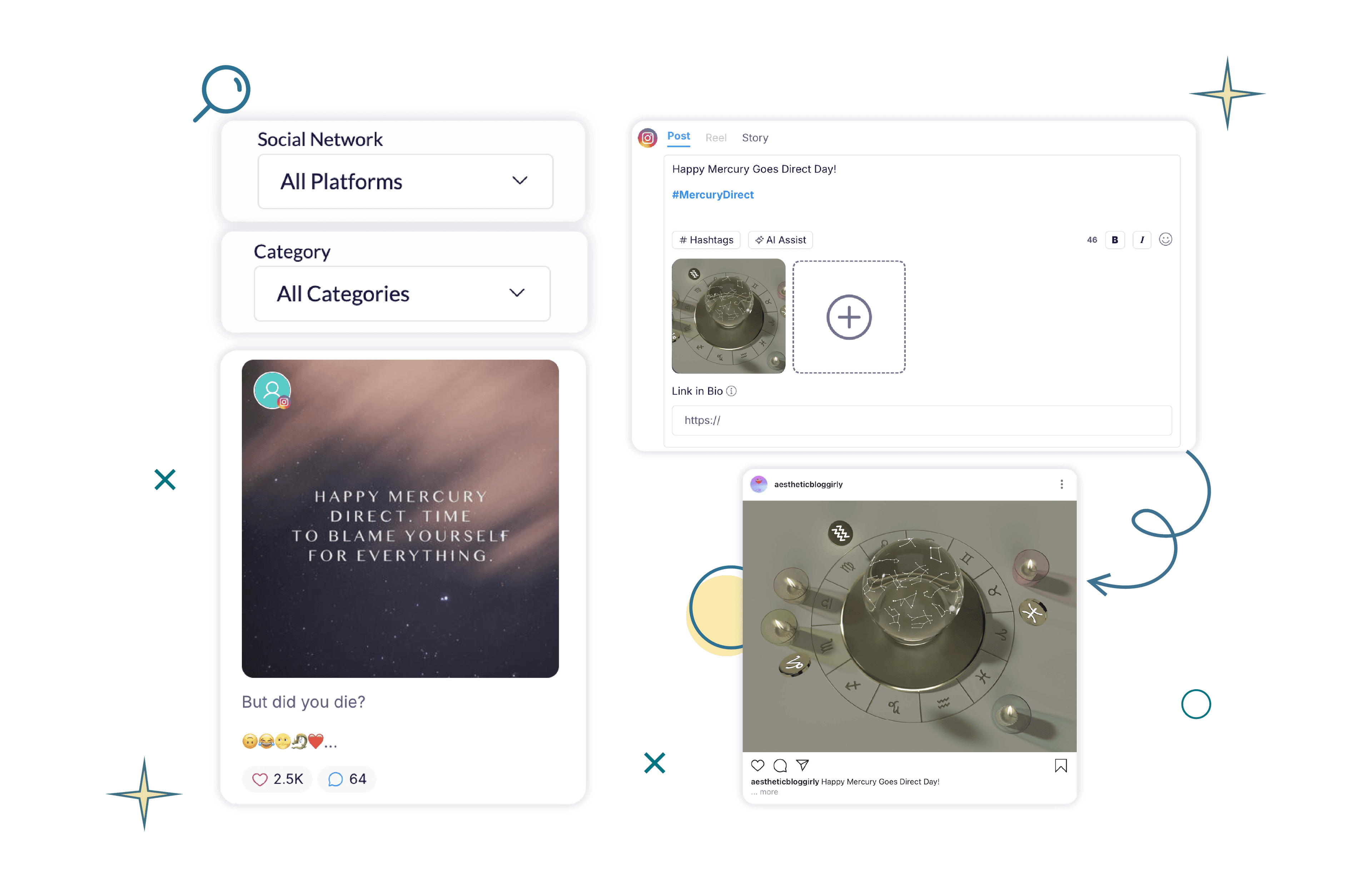
Menaxhoni të gjitha llogaritë tuaja të rrjeteve sociale me Publer
Me një sërë mjetesh të fuqishme dhe një ndërfaqe të kuptueshme nga përdoruesit, do të jesh në gjendje të krijosh, parapamjen, të planifikosh dhe të analizosh me lehtësi përmbajtjen tënde në rrjetet sociale.
Provoje falas